Commercial Painting
Painting a Toronto Retail Store While It Stays Open
By Paintina ·
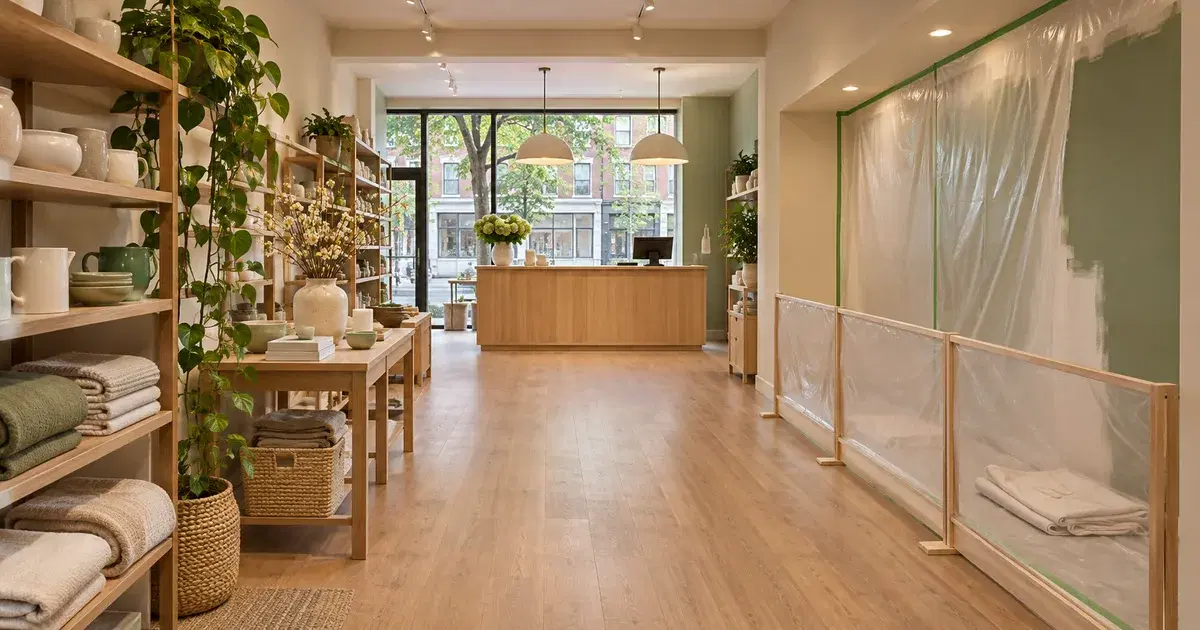
A Toronto retail store can often keep regular trading hours during a repaint if the work is split into small zones and busy areas are painted after closing. Start with the path customers use from the door to the merchandise and checkout. If the painter’s barriers, equipment or drying window would make that path unusable, price that area for a longer off-hours window or a planned closure.
Map how the store operates before drawing work zones
On a simple floor plan, mark the entrance, required exits, accessible routes, checkout queue, delivery route and space for displaced merchandise. Walk the plan at a busy time. The aisle that looks empty before opening may already be where the checkout queue backs up. Keep required exit routes clear at every stage, in line with the Ontario Fire Code.
For a mall unit, confirm landlord rules for contractor access, loading, waste removal and overnight mechanical ventilation. For a street-front shop with no independent receiving door, show how the crew will move equipment in and out without crossing the morning delivery or opening routine. If a facility customers with disabilities rely on will be unavailable, plan the notice and any workable alternative in advance. See Ontario’s accessible customer service guidance.
A phased repaint for a small Toronto shop
Consider a homewares shop with one register, two merchandise walls and a rear stockroom. It receives new inventory on Tuesday and needs the full sales floor over the weekend. The painter and store manager can plan the work around those constraints.
- Stockroom in a window between deliveries. Move cartons and set aside a clear staff route to active stock. Confirm where online orders will be picked and packed before giving the crew the room.
- One sales wall at a time after close. Assign store staff to move fixtures and product before the crew arrives. Agree where the displaced stock can sit overnight without narrowing the queue or an exit route. Inspect the first wall before releasing the second.
- Checkout during the longest available closed window. Arrange for the till and payment terminal to be moved and protected. Leave time to reconnect them and run a test transaction before doors open. If the counter area needs to stay out of service longer, agree on a workable alternate checkout location or reopening time before work starts.
Ask the painter to specify the time needed for preparation, coats, drying and cleanup in each zone. One phase may take several visits. The dry-to-touch time alone won’t tell you when merchandise can go back against a wall or when a zone is ready for customers.
Agree on a handover check before each reopening
- Assign a store lead and a crew lead to inspect the zone. Decide who can keep an area closed if it isn’t ready.
- Confirm that the planned ventilation and re-entry precautions have been followed for the coating and site. Ask the contractor to review the relevant safety data sheets and coordinate shared ventilation with the building. See CCOHS guidance for painting work.
- Check that floors are clean, barriers and equipment are clear of public routes, merchandise is protected, wayfinding is visible and checkout works.
- Ask when fixtures can go back against freshly painted walls and what cleaning the finish can tolerate in the first few days.
Get a retail painting estimate by phase
Share your floor plan, photos of each zone, trading and delivery hours, and the dates when the store needs full capacity. When you request a retail painting estimate, ask Paintina to itemize the prep, surfaces, fixture moves, work windows and sign-off for each phase. A quote written by zone makes it easier to see which parts can happen around regular hours and where a planned closure may be necessary.